


Blog
Single-Serve Coffee Sachets for Hygienic Business Service

Quick answer: Single-serve sachets are best where hygiene, speed, portability and exact portion control matter more than the flavour of freshly ground coffee.
Why portioned instant coffee remains useful
Freshly ground coffee may be the preferred experience, but not every location can support a machine. Remote meeting rooms, temporary events, guest trays and staff kitchens often need a simple product that stores well and can be prepared with a kettle.
Individually sealed sachets keep each dose protected until use and make stock easy to count.
Best business use cases
- Boardrooms and meeting packs
- Guesthouse and hotel room trays
- Events, training days and mobile catering
- Canteens with several self-service points
- Backup beverage stock during machine servicing
- Small offices with low or irregular demand
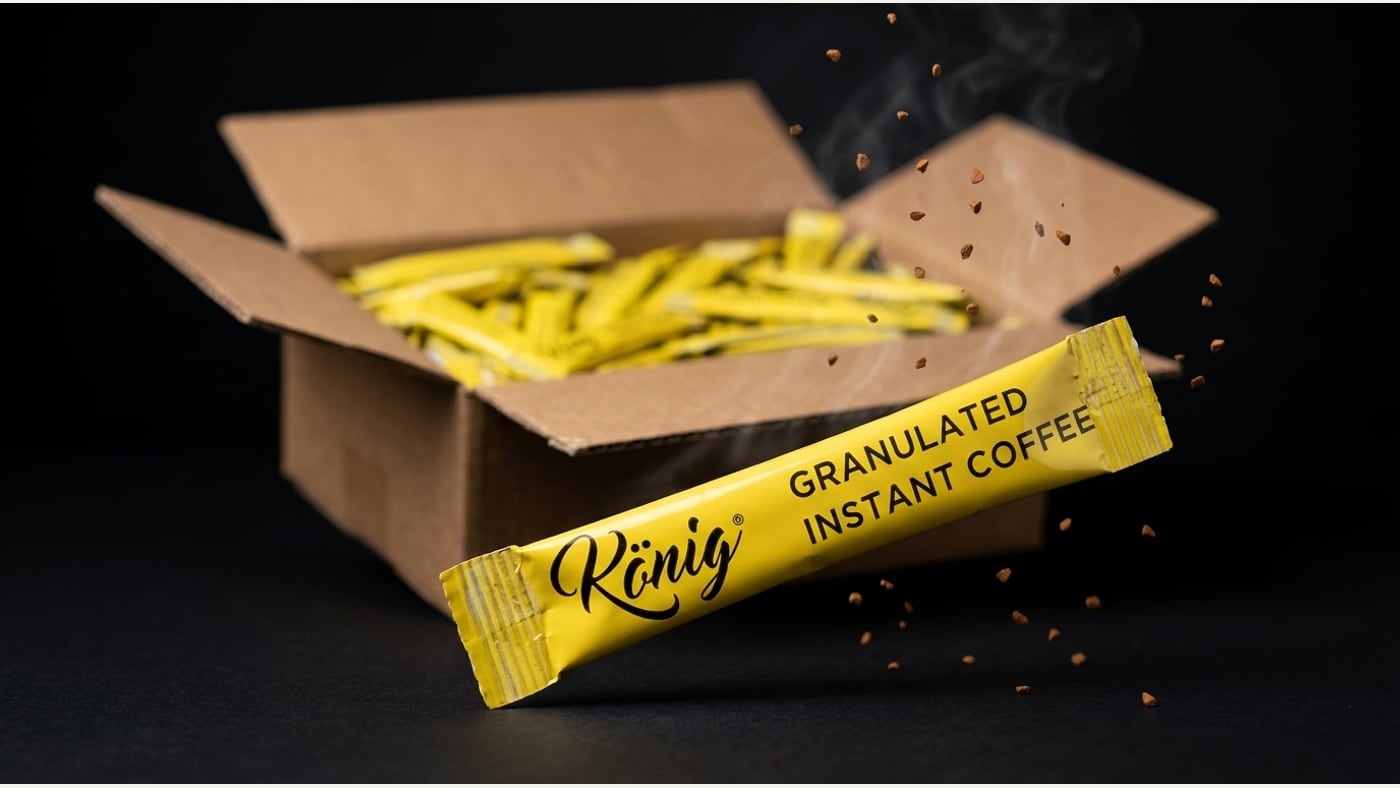
König’s Granulated Instant Coffee Sachets are packed as 200 individual portions for offices, hospitality, guesthouses, boardrooms, events and canteens.
Benefits for operations
Hygiene: Users handle only their own sealed portion.
Portion control: Each drink uses one measured sachet, reducing spoon-by-spoon variation.
Portability: Stock can be divided between rooms and sites without opening a bulk container.
Simple equipment: Preparation requires a cup, hot water and stirrer.
Limitations to consider
Sachets create individual packaging and do not deliver the aroma or crema of bean-to-cup coffee. At high volume, a properly managed bulk or automatic system may offer a lower cost per drink and less handling.
Use sachets where their operational benefits are valuable rather than making them the default for every location.
Present the station well
Arrange coffee, tea, rooibos, milk and sweeteners in labelled sections. Provide a clean waste point for wrappers and stirrers. Display the recommended water volume so a small dose is not diluted in an oversized mug.
Control stock
- Issue sachets by box or counted quantity to each area.
- Track weekly use and unusual variances.
- Rotate boxes by delivery and best-before date.
- Store them dry and away from steam or direct sun.
- Keep emergency stock separate from daily stock.
Compare cost per served cup
Add sachet, milk, sweetener, cup and stirrer costs. Then compare that figure with bean-to-cup or bulk instant service at the same location. Include waste and equipment, not only ingredient price.
A mixed strategy often works best: bean-to-cup at the main office station and sealed sachets in meeting rooms, guest areas or backup kits.
Frequently asked questions
Are individual coffee sachets hygienic?
They reduce shared handling because each dose remains sealed until use. The cups, kettle, milk and station still require normal hygiene controls.
How many drinks are in a box of 200 sachets?
A box of 200 single-serve sachets is intended to provide up to 200 measured coffee portions when one sachet is used per drink.
Are sachets cheaper than a coffee machine?
They avoid machine cost but may have a higher ingredient and packaging cost per cup at scale. Compare the complete service model.
Use portioned coffee where it solves a real problem
Place sealed sachets in distributed service points and retain automatic coffee where volume and experience justify it.