


Blog
Chai Latte for Workplace Menus: A Practical Guide

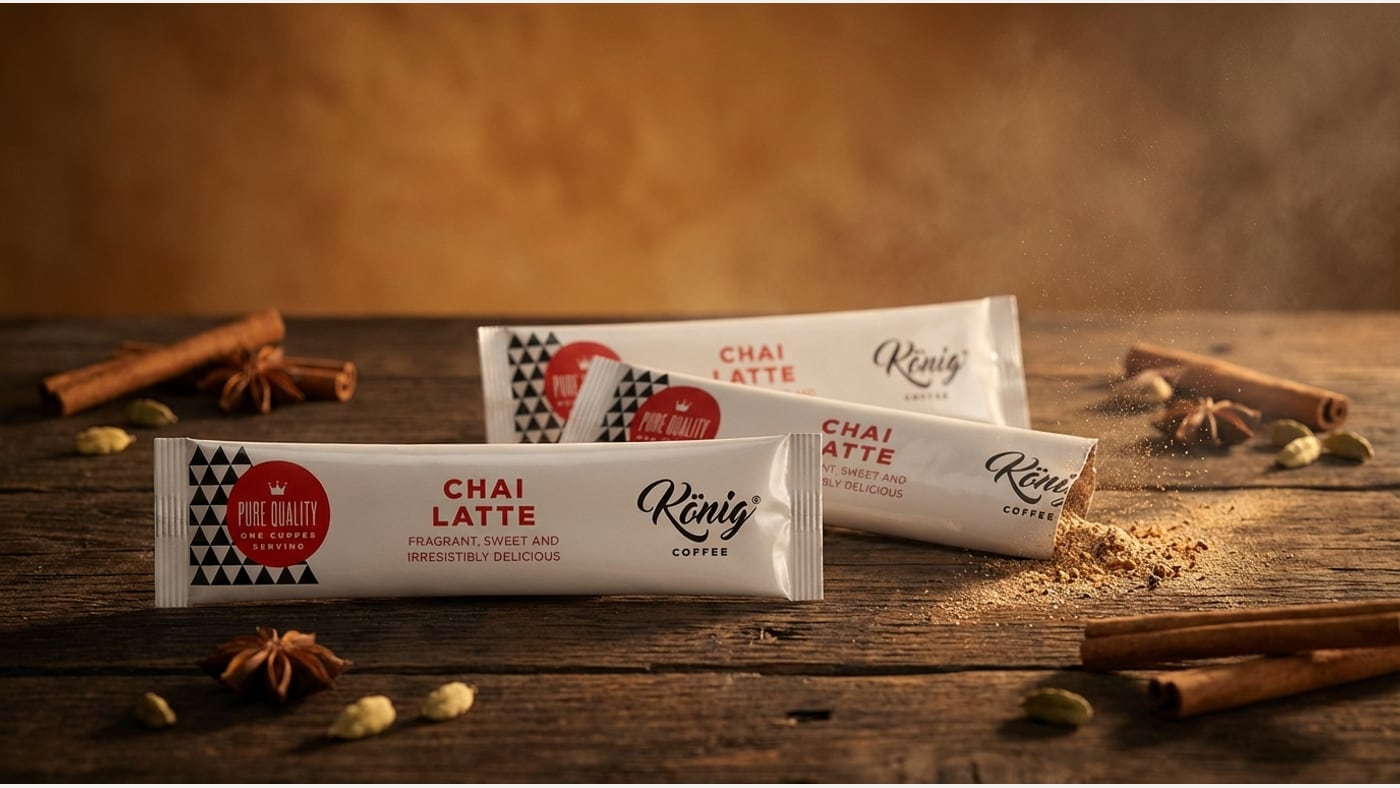
Quick answer: Chai latte works well as a non-coffee workplace option when the recipe, cup size and sweetness are standardised. Sachets suit flexible low-volume use; bulk product suits compatible high-volume machines.
Why chai earns a place beside coffee
A workplace beverage menu should serve more than caffeine habits. Chai latte offers a warm, spiced and creamy alternative that feels more substantial than plain tea. It can also support client hospitality and colder-weather demand.
The operational challenge is consistency. Chai can become too sweet, too weak or too milky when the dose and cup size are not controlled.
Choose sachets or bulk product
Sachets: Good for smaller offices, boardrooms, events and distributed kitchens. Each portion is sealed and easy to count. König’s Chai Latte Sachets can be prepared with hot water or milk according to preference and product directions.
Bulk soluble product: Good for a compatible vending or hybrid machine with steady demand. Automatic dosing speeds service and standardises the recipe, but the canister and mixer need regular cleaning.
Standardise the cup
A sachet formulated for one serving should not be stretched across an oversized mug. Select a workplace cup, test the intended water or milk volume and place a short instruction beside the station. If both hot water and milk are options, explain the flavour difference.
Keep sweetness transparent
Many chai latte mixes are sweetened. Do not place sugar into the recipe automatically unless required. Display ingredient and allergen information from the product packaging, and offer an unsweetened tea or rooibos alternative for people who prefer less sweetness.
Use menu names that reduce errors
On an automatic machine, label the selection “Chai Latte” rather than using a vague icon. If the recipe contains milk powder, distinguish it from black spiced tea. Clear naming reduces abandoned drinks and repeated dispensing.
Manage stock and storage
- Keep sachets and bulk powder sealed in a cool, dry cupboard.
- Protect open product from kettle and machine steam.
- Rotate stock by delivery and best-before date.
- Track servings so seasonal demand does not create shortages.
- Clean soluble mixers before residue hardens.
Cost chai like every other drink
Include the sachet or powder dose, milk where used, cup and service items. Compare waste as well as purchase price. Sachets can be moved between meeting rooms and sites, while bulk format becomes more economical when the canister turns over regularly.
Introduce the drink with a tasting
Prepare the final workplace recipe and gather feedback on spice, sweetness and cup size. A short tasting prevents a poorly configured machine recipe from becoming the permanent standard.
Chai should complement the coffee menu rather than add unnecessary complexity. If demand remains low, keep it in sachet form instead of dedicating a machine canister.
Frequently asked questions
Does chai latte contain coffee?
No. Chai latte is generally a spiced tea-based drink with milk or creamer, although ingredients vary by product.
Can chai latte sachets be made with water?
Many soluble chai sachets can be prepared with hot water or milk. Follow the instructions on the specific product.
Are chai latte sachets suitable for meetings?
Yes. Individual portions are easy to set out, count and prepare alongside coffee, tea and hot chocolate.
Offer chai without complicating the station
Start with portioned sachets, measure demand and move to a bulk machine recipe only when volume supports it.