


Blog
Bulk Vending Supplies Cost Control for Business

Quick answer: Control vending cost by fixing recipes, costing every gram, matching cup size to dose, keeping ingredients dry, measuring waste and setting reorder levels from actual servings rather than purchase value.
Cost control starts in the recipe
Bulk ingredient price is easy to compare, but the cost of each drink depends on the programmed dose. Two machines using the same 2.5kg product can produce different cost per cup if one dispenses more powder or uses a larger cup.
Document every recipe: coffee grams, milk topping, chocolate or chai dose, water volume and cup size. Lock the approved setting and record authorised changes.
Calculate ingredient cost per drink
Use a simple formula:
Ingredient cost per cup = pack price ÷ number of servings from the pack.
If several ingredients are used, add the cost of each dose. Then include cup, lid, sugar and stirrer where applicable. Rental, cleaning, filters and service can be added to calculate a fully loaded cost.
Measure yield instead of assuming it
Weigh a full canister or record the opening pack count, note the machine counter, then measure again after a representative period. This confirms real yield and reveals over-dosing, spills or unrecorded use.
Store soluble products correctly
Moisture causes powders to clump and can block mixers or canister outlets. Store sealed packs in a cool, dry area off the floor. Do not refill canisters beside steam, and avoid mixing old product with new stock when the canister needs cleaning.
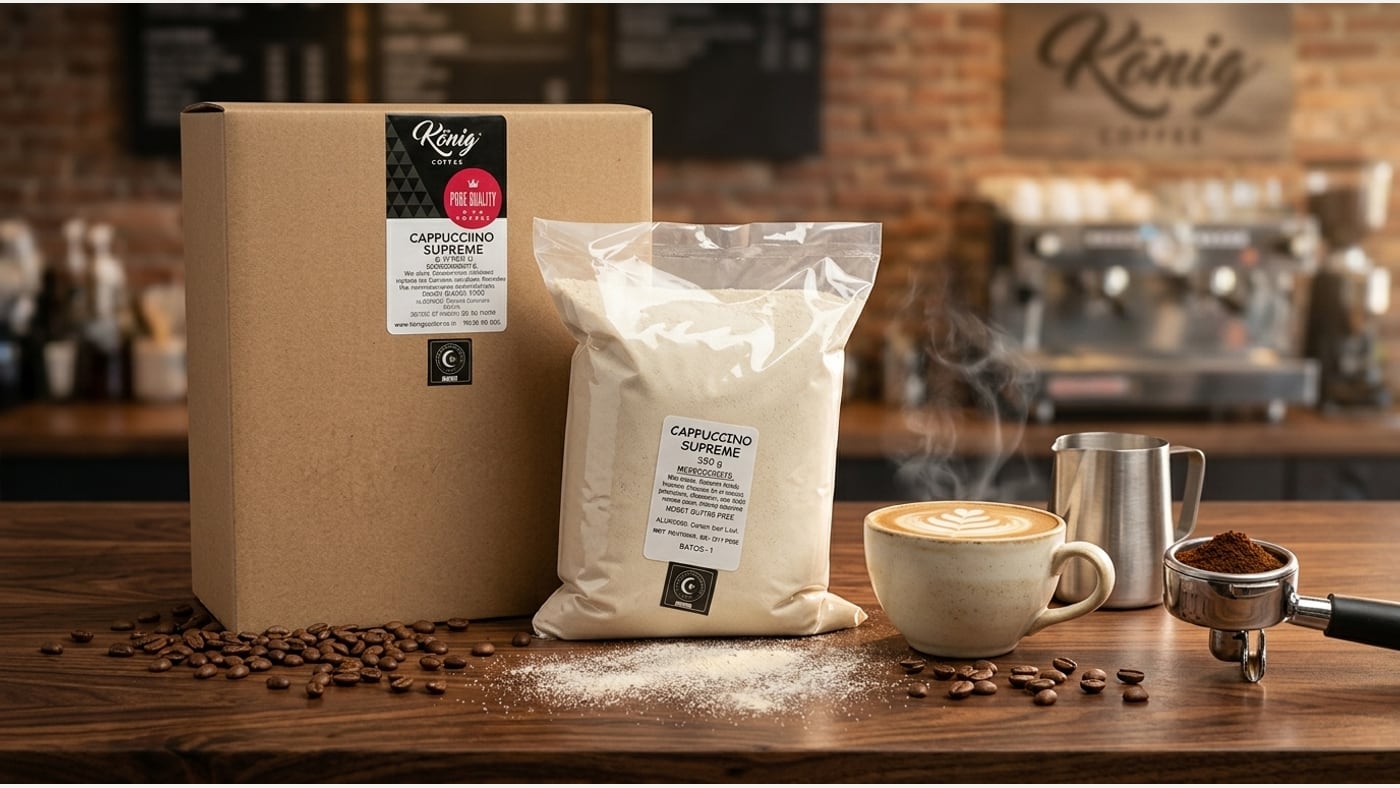
Products such as König Cappuccino Supreme are intended for consistent beverage preparation. Consistency depends on both the product and a clean, calibrated machine.
Watch the hidden waste points
- Test drinks made after every refill without recording them
- Oversized cups that require stronger recipes
- Powder spilled during filling
- Clumped product discarded because storage was humid
- Users selecting and abandoning the wrong drink
- Machine calibration that dispenses more than the approved dose
Set stock levels from servings
Translate closing stock into available drinks. If a canteen needs 600 cappuccinos before the next delivery, the team should know how many sealed packs that requires, plus safety stock. This is more useful than knowing only the rand value in the storeroom.
Balance choice with complexity
Each additional flavour creates another canister, recipe and stock line. Keep the menu broad enough to serve users but small enough to rotate stock quickly. Review sales or machine counter data and remove recipes with persistent low demand.
Use a monthly variance report
Compare expected servings from ingredients issued with actual machine-counter drinks. Investigate material differences. The aim is not to police every cup; it is to identify recipe drift, stock loss or avoidable waste early.
Frequently asked questions
How do I calculate vending cost per cup?
Divide each ingredient pack cost by its measured servings, add all ingredients and serving items, then include equipment and service costs if a fully loaded figure is needed.
Why does vending powder clump?
Humidity, steam exposure, poor sealing or a dirty canister can cause clumping. Keep packs and machine canisters clean and dry.
How can a business reduce vending waste?
Standardise recipes, use correct cup sizes, train refill staff, measure yields, rotate stock and compare ingredient use with machine counters.
Build a costed beverage menu
Select bulk ingredients, set standard recipes and review actual yield after the first month of operation.