


Blog
Filter Coffee for Meetings and Events: A Planning Guide

Quick answer: Estimate attendees and cups per person, brew in smaller timed batches, avoid holding coffee too long, and stage milk, sugar, cups and waste flow before guests arrive.
Why filter coffee still works for groups
Filter coffee can serve several people from one brew, making it practical for board meetings, training days, conferences and breakfast service. It requires less individual preparation than espresso drinks and can be positioned in self-service stations.
The quality challenge is timing. Coffee brewed too early loses aroma and can develop a flat or stewed taste. The service plan should therefore follow the event schedule.
Estimate the number of servings
Start with confirmed attendees, event duration and time of day. Morning sessions typically create stronger coffee demand than late afternoon. Include organisers, speakers and staff.
A simple planning range is one to two cups per coffee drinker for a short session, with more for a full-day event. Do not assume every attendee drinks coffee; include tea, rooibos, hot chocolate and water.
Use measured portions for consistency
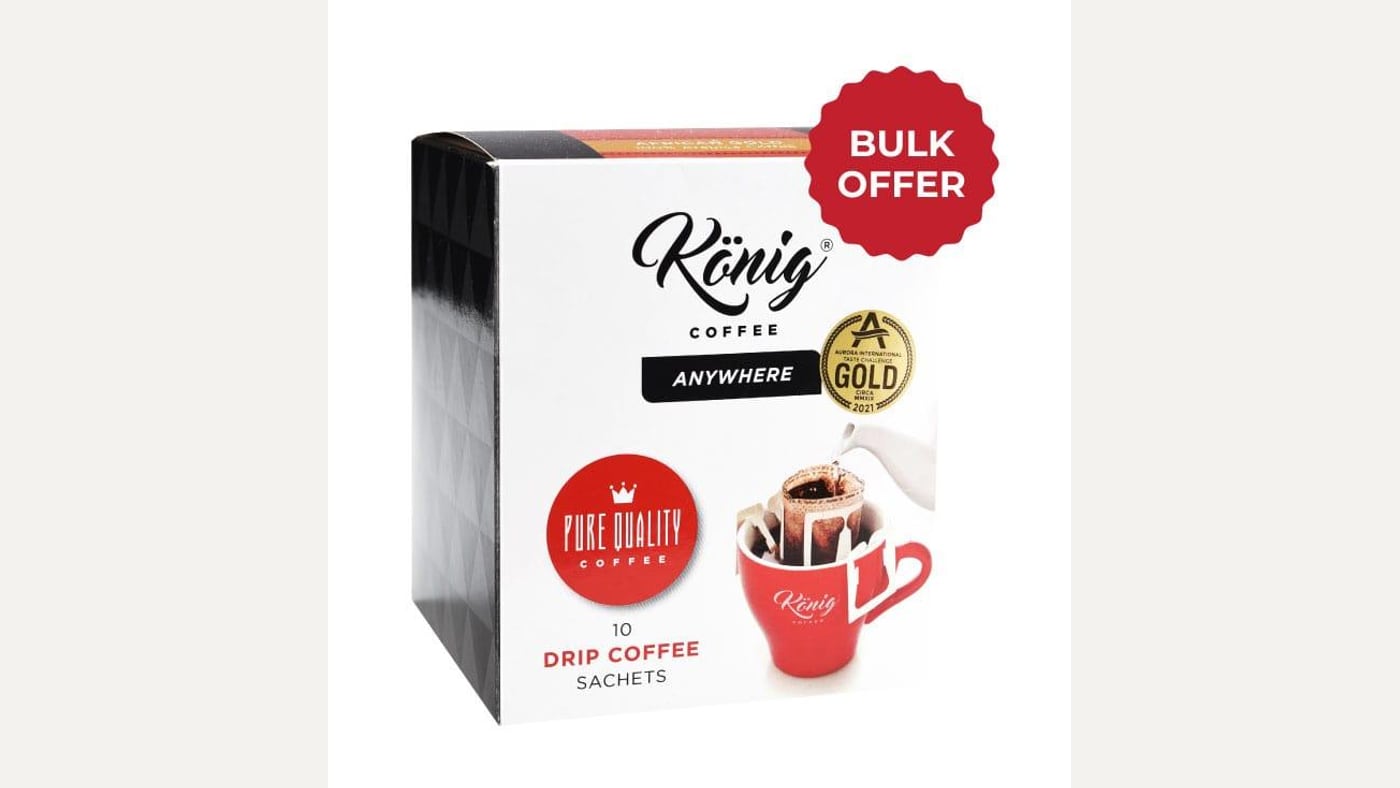
Pre-portioned filter coffee reduces guesswork across staff and venues. König offers drip filter coffee sachets and bulk filter formats designed around repeatable servings. Follow the packet’s water ratio rather than filling a brewer by eye.
Build a timed batch plan
| Event moment | Action |
|---|---|
| 30–45 minutes before | Set station, test equipment and heat service vessels |
| 10–15 minutes before | Brew the first batch |
| During arrival | Monitor volume and start a smaller second batch if needed |
| Before the next break | Discard tired coffee and brew fresh |
Use insulated airpots or approved thermal servers rather than leaving coffee on a hot plate for extended periods. Label decaf or alternative beverages clearly.
Plan the complete station
- Cups sized to the expected serving
- Lids for movement between rooms where appropriate
- Fresh milk or suitable milk portions kept at safe temperature
- White, brown and sweetener options without excessive duplication
- Stirrers, napkins and a stable waste point
- Hot water and tea positioned to prevent queue conflict
Protect flavour
Use fresh water and clean equipment. Rinse paper filters if the brewer instructions allow it. Keep opened ground coffee sealed away from heat and strong odours. Clean the basket and server after every service period because residual oils affect the next batch.
Reduce waste without running short
Brew the first batch for confirmed early demand, then top up with smaller batches. Record how much was brewed and discarded. After several events, the venue will have a reliable consumption pattern by event type and time of day.
A measured, fresh-batch approach usually produces better coffee and lower waste than preparing every possible cup before the doors open.
Frequently asked questions
How much filter coffee should I make for a meeting?
Plan from attendance, event length and historical usage. One to two cups per coffee drinker is a useful starting range for a short meeting.
How long can brewed filter coffee stand?
Quality declines with time, especially on direct heat. Use thermal servers and brew timed batches rather than holding one large batch for the whole event.
What is the advantage of pre-portioned coffee?
Measured sachets improve consistency, speed stock counting and reduce dosing errors across staff and locations.
Standardise coffee across every meeting room
Use portioned coffee and a written batch plan so different staff can produce the same result.