


Blog
Water Quality and Coffee Machine Filters: What Businesses Need

Quick answer: Water quality affects extraction, aroma, scale and machine reliability. A correctly sized filter can reduce unwanted hardness, chlorine, particles and certain metals while retaining suitable mineral content for coffee.
Coffee is mostly water
Beans receive most of the attention, but water carries the flavour into the cup. Water that smells strongly of chlorine can flatten aroma. Excess hardness can create scale on heating surfaces. Water with unsuitable mineral balance may make coffee taste dull, sharp or inconsistent.
For a business, this is also an equipment issue. Scale restricts water flow and reduces heat transfer. That can increase energy use, lengthen drink times and contribute to faults.
What a coffee water filter should do
The goal is not to remove everything. Coffee extraction needs an appropriate mineral balance. A suitable filter should address the specific local water rather than simply promise “pure water”.
- Reduce carbonate hardness that contributes to limescale
- Reduce chlorine and particles that affect taste and components
- Help control certain metals such as copper and zinc
- Maintain a stable water profile suitable for brewing
- Deliver enough capacity for the site’s actual consumption
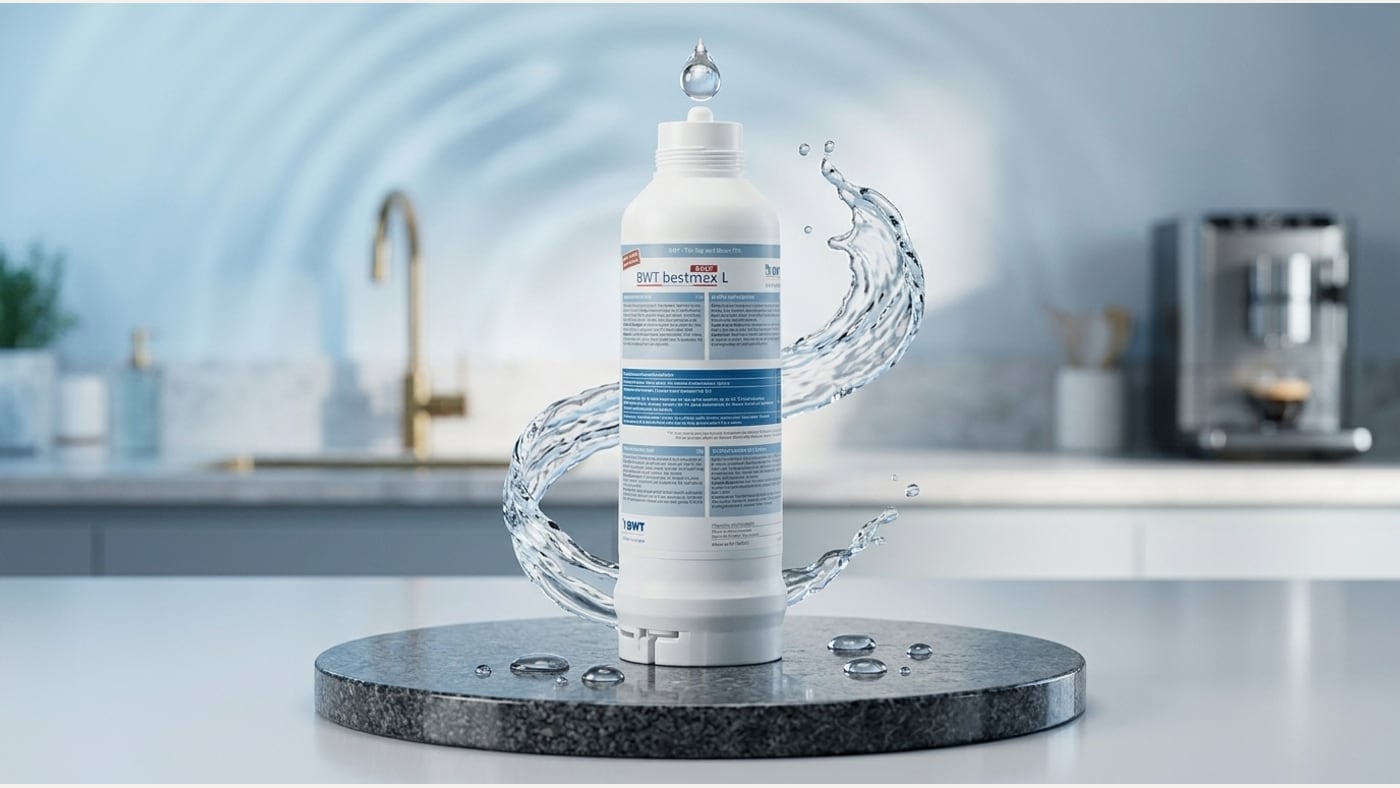
König lists the Bestmax Smart 25 Filter for limescale reduction, lower chlorine and particle concentration, stable pH and controlled mineralisation. The matching filter head supports bypass adjustment and cartridge replacement.
Test before selecting a cartridge
Water conditions differ by municipality, building and storage system. Ask for hardness or alkalinity testing at the installation point. A machine connected after a tank or building filter may receive different water from the municipal reading.
Use the result, expected litres per day and beverage type to select cartridge size and bypass setting. An undersized cartridge will reach capacity too quickly; an oversized one may cost more without practical benefit.
Track replacement dates and volume
A filter should not remain installed indefinitely. Create a log with installation date, cartridge type, starting meter reading and expected replacement point. High-volume sites may replace by measured litres, while lower-volume sites also need a maximum time limit for hygiene and performance.
Filtration is not the same as descaling
A filter reduces the rate of scale formation; it does not remove scale already inside the machine. Descaling uses a compatible chemical process to dissolve mineral deposits. Follow the machine manual and supplier guidance because unnecessary or incorrect descaling can damage components.
Signs of water-related trouble
- Longer heating or dispensing times
- White mineral residue near hot-water outlets
- Changes in coffee taste despite the same beans and recipe
- Reduced water flow or recurring temperature errors
- A filter cartridge that has exceeded its rated capacity
Include water treatment in every new machine proposal. It is easier and less expensive to prevent scale than to repair its consequences.
Frequently asked questions
Does filtered water make coffee taste better?
It can improve consistency by reducing chlorine, particles and unsuitable hardness while retaining useful minerals. The result depends on the starting water and filter setup.
How often should a coffee machine filter be changed?
Replacement depends on cartridge capacity, hardness, bypass setting, litres used and time in service. Record usage and follow the supplier’s specification.
Do I still need to descale if I use a filter?
Possibly. Filtration reduces scale formation but does not guarantee zero scale. Follow machine prompts, water test results and service guidance.
Protect the machine from the first installation
Ask König Coffee to include water testing, filter sizing and a replacement schedule in your equipment plan.